
What Is Spaced Repetition, How Does It Work — and Does It Actually Help?
Spaced repetition schedules each thing you learn for review right before you'd forget it, so your study time goes where it does the most good. Here's how it works, why it beats re-reading, and the one reason most people quit before it pays off.
If you've ever crammed for an exam, aced it, and then forgotten everything two weeks later, you've already met the problem spaced repetition was built to solve.
The core idea
Your memory of anything you learn fades over time — quickly at first, then more slowly. But every time you successfully recall something right around the moment you were about to forget it, the memory comes back stronger, and it fades more slowly the next time. A spaced repetition system (SRS) is just software that tracks this for you: it schedules each piece of information for review at growing intervals — today, then in a few days, then a week, then a month — so you review things exactly when the review does the most good.
Why it beats how most of us study
Compare that to how most of us actually study: re-reading notes we already know, highlighting things that feel important, and ignoring the stuff that's quietly slipping away. SRS flips this. It spends your limited study time on the material you're closest to forgetting and stops wasting it on what you already know cold. You do less total reviewing and remember more.
Does it actually help?
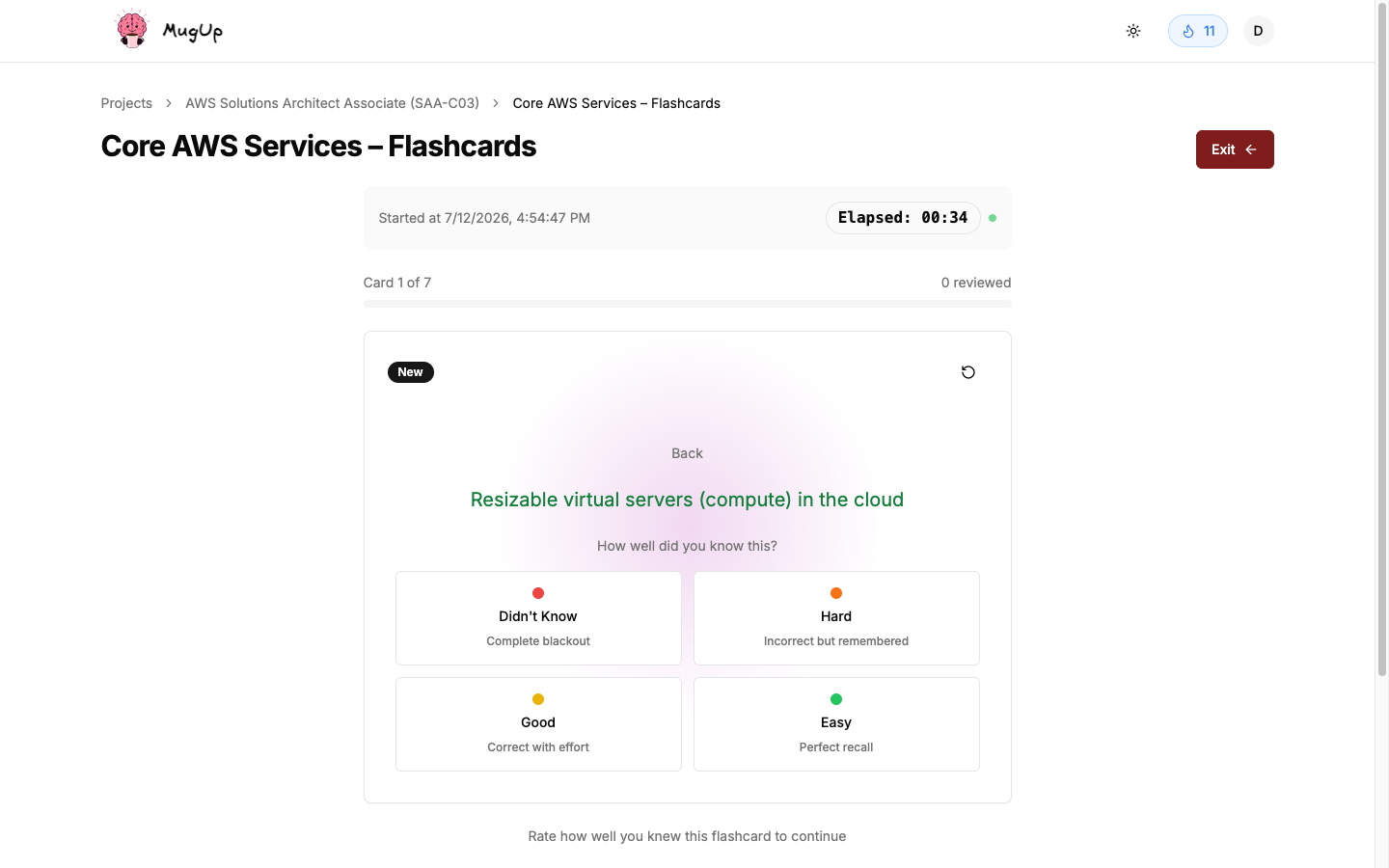
In our experience, yes — and not by a little. The difference between cramming and spaced review isn't the grade on exam day; it's whether the knowledge is still there months later when you actually need it. Recall is also active — being forced to retrieve an answer works the memory in a way that passively re-reading never does.
The honest catch
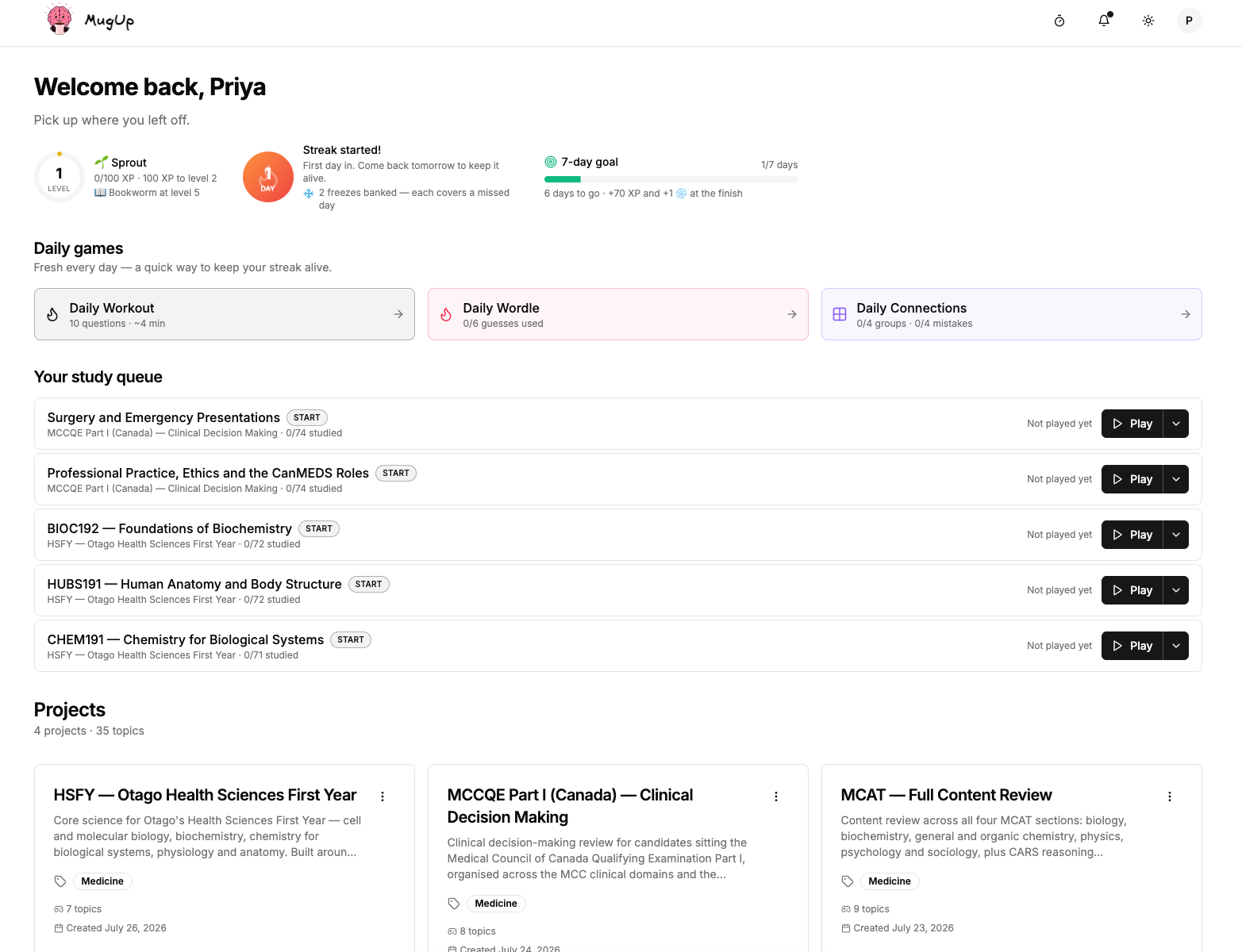
Traditional SRS tools feel like homework about your homework. Endless card reviews get monotonous, and most people quit before the compounding kicks in. That's the part we've focused on with MugUp — the spaced repetition engine is built into the game types themselves, so your reviews happen inside games you actually want to play. Answer well and a question's gap grows; slip and it comes back sooner, whether it was a flashcard, a multiple-choice question, a fill-in-the-blank or a pair-match tile. The scheduling runs under the hood; what you experience is just playing, winning, and coming back tomorrow. The streak keeps you consistent, and consistency is the whole trick.
Try it on something you're already studying
Take one topic you're revising this week and let it come back to you on a schedule instead of whenever you happen to think of it. Start free, or browse the deck library and clone one to see the shape of it. Pro adds the daily Review workout, which pulls everything due across your whole library into a single session — see the pricing page.
The takeaway
You don't need a perfect memory. You need a system that remembers when you're about to forget — and makes showing up for the review something you look forward to.
Turn this into a game
Type a topic and MugUp's AI builds quizzes, flashcards, and matching games in seconds. Free to start.